Description
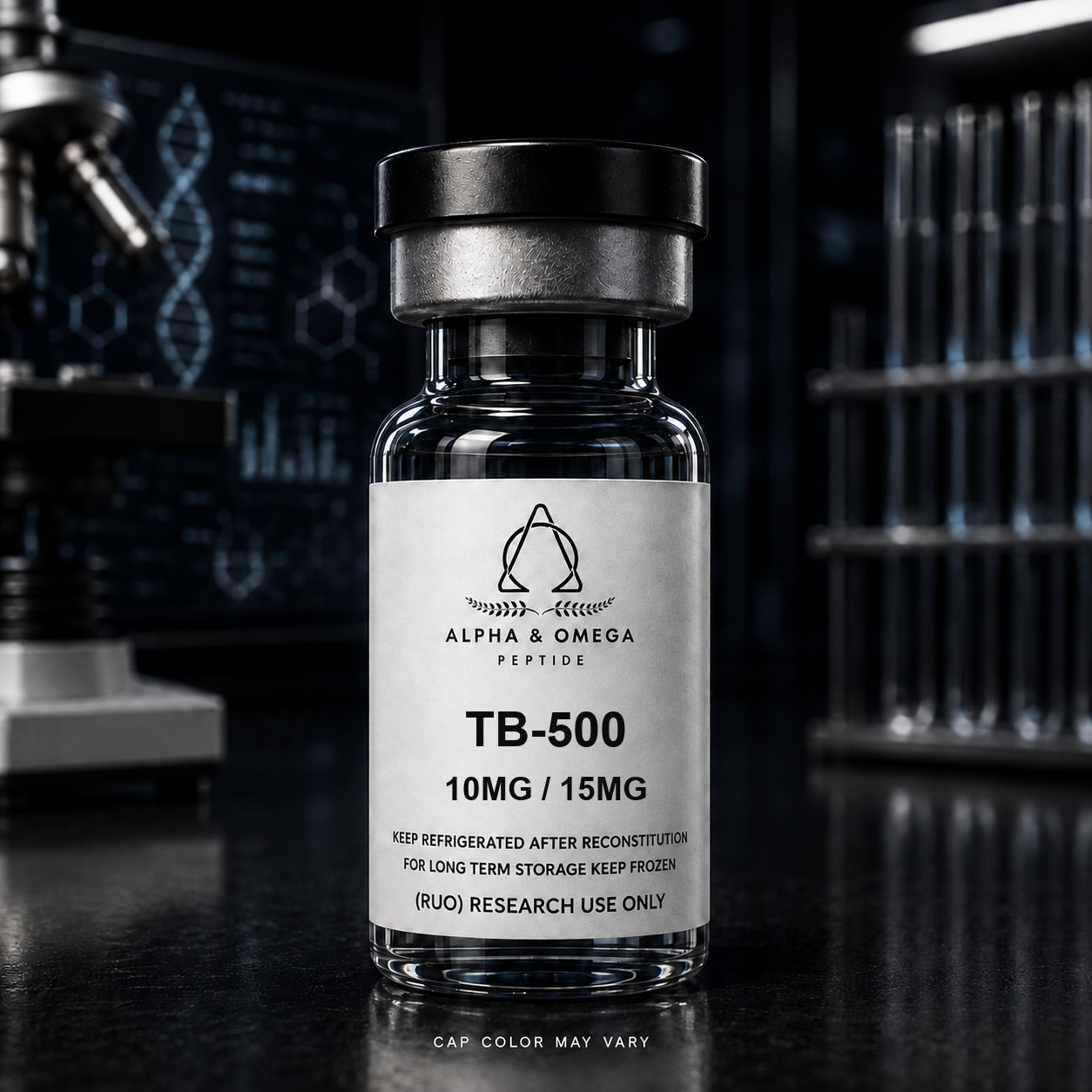
TB-500 is supplied by Alpha & Omega Peptide as a freeze-dried research peptide in 10MG or 15MG vials. The name is used in research supply for synthetic material related to thymosin beta-4, a small actin-binding protein that appears widely in cell-biology literature.
What is TB-500 (thymosin beta-4)?
Thymosin beta-4 (Tβ4) is a 43-amino-acid protein found in many cell types, where it binds monomeric actin and helps regulate the pool of actin available for building the cytoskeleton. Its short actin-binding motif, LKKTETQ, is the region most often discussed in structure–function work.
In the research-chemical market the name “TB-500” is applied to synthetic thymosin beta-4 or to shorter synthetic peptides built around that actin-binding region. Check the vial label and your supplier documentation to confirm the exact material used in your study, and record it with your results.
TB-500 specifications
| Product reference | TB-PW |
|---|---|
| Compound | TB-500 (synthetic thymosin beta-4 related peptide) |
| Strengths available | 10MG or 15MG per vial |
| Format | Freeze-dried (lyophilised) powder in a sealed vial |
| Label storage note | Keep refrigerated after reconstitution; for long-term storage keep frozen |
| Intended use | Laboratory and in-vitro research only |
Thymosin beta-4 in published research
Thymosin beta-4 has been studied in cell culture and animal models of cell migration, actin dynamics and tissue repair processes. Much of this work concerns how Tβ4 influences cytoskeletal organisation and cell motility. As with any preclinical literature, results depend on the specific peptide, model and conditions used.
It is frequently paired with BPC-157 in experimental designs, and both appear together in our BPC/TB-500 blend and in the GLOW and KLOW multi-peptide vials.
Preparation, handling and storage
The product is shipped as a freeze-dried (lyophilised) solid. Lyophilisation removes water at low temperature and pressure, which generally makes a peptide more stable in transit and storage than a solution. Before use, the powder is reconstituted with a diluent chosen by your protocol. Common laboratory options include bacteriostatic water, sterile water, dilute acetic acid or a buffered saline such as PBS. Add the diluent slowly down the inside wall of the vial and swirl gently rather than shaking, which can cause foaming.
Keep unopened vials sealed, cold, dry and away from light. After reconstitution, refrigerate the vial and mark it with the date and concentration. For longer storage, keep the product frozen, as printed on the label. Where your protocol allows, divide material into aliquots to avoid repeated freeze–thaw cycles.
Ordering from Alpha & Omega Peptide
Every listing on our site shows the compound, strength, format and product reference (SKU), so it is simple to match what arrives with your lab records. You can add reconstitution and handling supplies such as bacteriostatic water, acetic acid solution, PBS and mixing syringes to the same order from our lab supplies range. Questions before you buy? Email support@alphanomegapeptide.com and include the product reference.
Frequently asked questions
What strengths of TB-500 are available?
It is available as 10MG or 15MG vials. Select the option you need above the add-to-cart button; the price updates to match.
Is TB-500 for human or animal use?
No. It is supplied for laboratory and in-vitro research only and must not be administered to people or animals. We do not give dosing, administration or medical advice.
Related research products
- BPC-157
- BPC-157/TB-500 Blend
- GHK-Cu/BPC-157/TB-500 GLOW Blend
- BPC-157/Thymosin B4 (Ac-SDKP) capsules
- Tissue research peptides
Research use only
This peptide is sold strictly for laboratory and in-vitro research by qualified professionals. It is not a drug, food, cosmetic or dietary supplement, it is not intended to diagnose, treat, cure or prevent any disease, and it must not be administered to humans or animals. We do not provide dosing or administration guidance. Please read our research use policy before ordering. For chemical identifiers and literature links, see the PubChem entry for thymosin beta-4.
Reviews
There are no reviews yet.